Wondering why a walk through Galveston’s East End feels so visually rich? It is not just the color, trim, or grand porches. This historic district reads like a living timeline, with homes that reflect Galveston’s earliest residential development, post-fire rebuilding, and early 20th-century design trends. If you are house hunting, researching a historic property, or simply want to better understand the area, this guide will help you spot the key architectural styles that define the East End. Let’s dive in.
Why East End architecture stands out
Galveston’s East End Historic District holds a special place in the city’s history. According to the City of Galveston’s East End overview, it was the city’s first residential neighborhood and the first locally designated historic district in 1971, later expanded in 1994.
Its layout still reflects the original 1838 plat, with 14 lots per block and rear alleys. The district’s character was also shaped by the Great Fire of 1885 and the rapid rebuilding that followed, when architects like Nicholas Clayton, Alfred Muller, and George Stowe helped create the Victorian streetscapes you see today.
The result is a neighborhood that feels layered rather than uniform. The National Register nomination describes the district as a historic snapshot that includes Greek Revival structures, hundreds of late 19th-century Victorian homes, early 20th-century houses, and later buildings that add to its variety.
Greek Revival roots
Some of East End’s earliest homes reflect Greek Revival design. These houses are often two-story wood-frame dwellings with symmetrical fronts, double galleries, and entry doors framed by sidelights and transoms.
More broadly, the National Park Service’s description of Greek Revival architecture points to boxy, rectangular forms, emphasized pedimented roofs, and porches supported by Greek columns. In smaller homes, you may see a simpler triangular entrance treatment instead of a full temple-like front.
In East End, these houses give you a glimpse into Galveston’s antebellum beginnings. They tend to feel orderly, balanced, and restrained compared with the more decorative homes built later.
How to recognize Greek Revival homes
When you are viewing a home or walking the neighborhood, look for these clues:
- Symmetrical front facade
- Two-story form
- Double galleries or stacked porches
- Sidelights and transoms around the front door
- Pediment-like roof shapes or classical porch details
Queen Anne and Victorian drama
If one style defines East End’s visual energy, it is Queen Anne. This is the style many people picture when they think of grand Victorian Galveston homes.
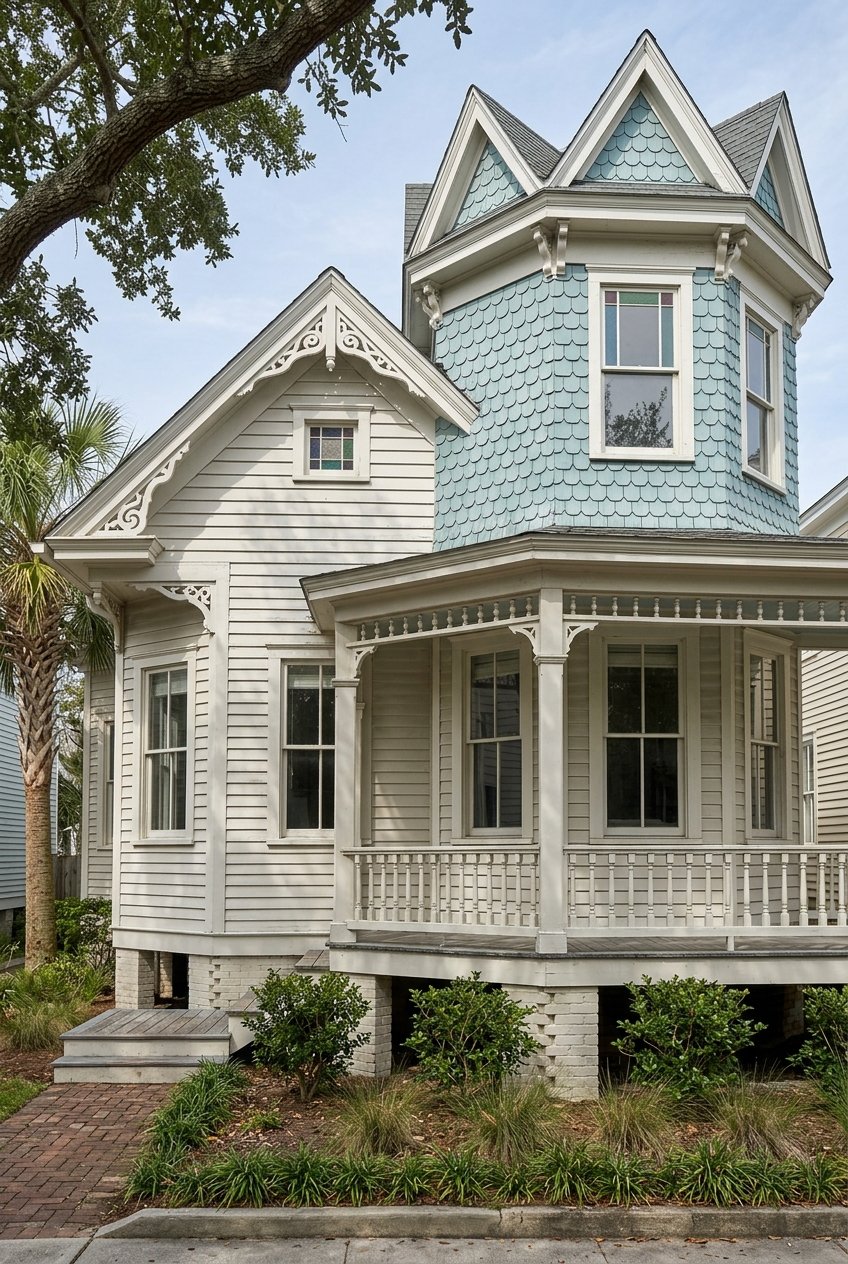
The National Park Service’s Queen Anne overview highlights hallmark features like asymmetrical massing, intersecting gables, dormers or turrets, wraparound porches, patterned shingles, stained glass, and spindlework. In East End, many homes use those elements in creative combinations rather than following one strict textbook style.
That mix is part of the district’s charm. Inventory examples in the district show Queen Anne homes blending with Eastlake shingles, Italianate, Stick, Second Empire, or Romanesque details, which gives many houses a layered and highly individual look.
East End Victorian homes are often hybrids
One of the most helpful things to know as a buyer is that East End homes are not always easy to label with one style name. A house may have Queen Anne massing, Eastlake trim, and Romanesque influences all at once.
That is why it often makes more sense to study the home’s overall shape first, then notice the decorative details. Roofline, porch form, and massing usually tell you more than a style label alone.
Bishop’s Palace as a landmark example
One of the district’s best-known architectural landmarks is Bishop’s Palace. The National Park Service notes its blend of Queen Anne and Richardsonian Romanesque features, including rusticated stone, towers, dormers, gables, and a strikingly irregular roofline.
Even if most homes in the district are smaller and more residential in scale, this landmark helps illustrate the dramatic design language that influenced East End’s Victorian identity.
Colonial Revival and early 20th-century styles
As Galveston moved into the late 1890s and early 20th century, local tastes shifted. Colonial Revival and related classical forms became increasingly popular, adding another layer to the district’s architectural story.
The National Park Service’s Colonial Revival guide describes these homes as more symmetrical, often featuring fanlights, sidelights, Palladian windows, columns or pilasters, and prominent front porches. Compared with Victorian houses, they usually feel calmer and more formal.
In the East End, these homes contribute balance to the streetscape. They do not compete with Victorian ornament so much as complement it, showing how the neighborhood continued to evolve over time.
Spanish Colonial Revival and Craftsman influence
East End also includes early 20th-century homes with Spanish Colonial Revival and Craftsman or bungalow features. Based on the district records and city standards, Spanish Colonial Revival homes may include stucco walls, Spanish tile roofs, shuttered windows, exposed rafters, and stucco piers.
Craftsman and bungalow houses tend to be easier to spot for their low-pitched gables, broad eaves, exposed rafters, and tapered porch columns. These homes are generally more understated than Queen Anne houses, but they still play an important role in the district’s historic variety.
Vernacular cottages and modest forms
East End is not only about large, ornate homes. Part of what makes the district feel authentic is its mix of grand residences and simpler everyday buildings.
The National Register documentation notes dormered cottages, gable-end houses, alley houses, small corner stores, and shotgun or commissary houses within the district. Galveston’s design standards describe commissary houses as very narrow, simple homes with hipped or gabled roofs, small porches, and bargeboard detail.
These smaller forms matter because they broaden your understanding of the neighborhood. East End’s appeal comes from architectural range, not just from its largest homes.
What gives East End its curb appeal
The district’s beauty is not only about individual houses. It is also about how the homes relate to one another across each block.
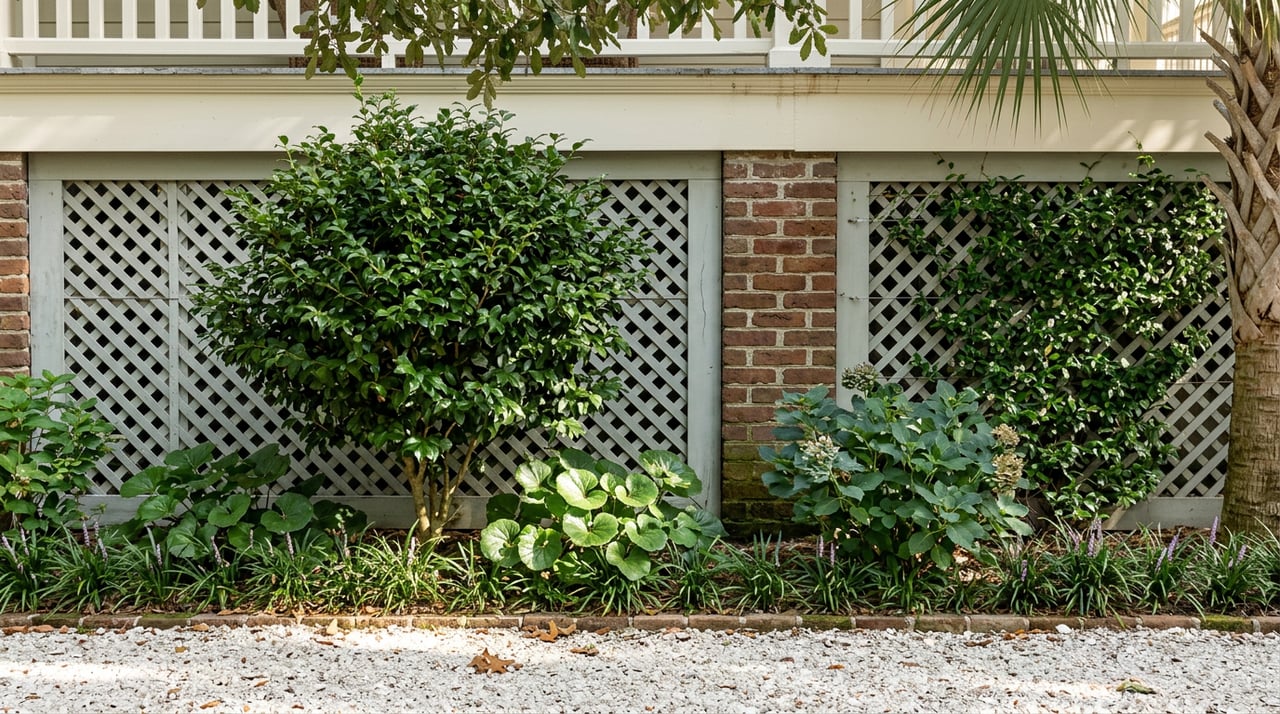
According to the City of Galveston’s Design Standards for Historic Properties, East End’s distinct feel comes from features like narrow lots, front galleries, raised foundations or basements, rear alleys, outbuildings, and a mix of scales. The standards also point to neighborhood-oriented commercial buildings along 14th Street, historic landscape features, and maintained public spaces that support a sense of continuity.
The National Register nomination adds that the district’s unique quality comes from the visual continuity created by dwellings related in material, texture, and scale. In practical terms, that means even different house styles often feel cohesive when seen together.
How buyers can read East End listings
If you are shopping for a home in the district, it helps to look beyond the style name in the listing description. A more useful approach is to identify the dominant massing, roof shape, and porch type first, then study the decorative details layered on top.
This matters because many East End houses combine multiple influences. As the research for the district shows, some of the strongest examples are not the purest stylistically. They are often the homes with intact porches, windows, trim, and roofline details.
Features worth noting during a showing
When touring an East End property, pay close attention to:
- Overall form and roofline
- Porch configuration and original columns
- Window shape and placement
- Exterior trim and decorative woodwork
- Raised foundation or basement relationship to the street
- How the home fits the scale and rhythm of the block
Historic district review matters
There is one practical point every buyer should understand. East End properties are located within a locally designated historic district, so exterior work is reviewed under Galveston’s historic design standards.
The city directs owners and prospective buyers to the Historic District Survey Inventory and preservation staff for guidance. If you are considering updates, repairs, or future restoration, that context is important from the start.
For many buyers, this review process is part of the appeal. It helps support the district’s visual continuity and protects the architectural character that makes East End so desirable.
Why architectural knowledge helps you buy smarter
In a neighborhood like East End, design literacy gives you a real advantage. When you understand how to read style, scale, and historic detail, you can better evaluate a home’s character, condition, and long-term appeal.
That is especially useful in a district where houses often blend styles and where intact details can make a meaningful difference. Whether you are drawn to a stately Greek Revival, a richly layered Victorian, or a simpler bungalow or cottage, the best buying decisions come from seeing the house as part of a bigger architectural story.
If you are exploring historic homes in Galveston and want local insight into architecture, property context, and what to look for block by block, Spagnola Realty Group offers a polished, informed approach grounded in Galveston expertise.
FAQs
What architectural styles are most common in Galveston’s East End Historic District?
- The district includes Greek Revival, late Victorian and Queen Anne, Colonial Revival, Spanish Colonial Revival, Craftsman, bungalow, and smaller vernacular cottage forms.
How can you identify a Queen Anne home in Galveston’s East End?
- Look for asymmetrical massing, intersecting gables, wraparound porches, dormers or turrets, patterned shingles, stained glass, and decorative spindlework.
Why do many Galveston East End homes seem hard to classify by one style?
- Many houses in the district are hybrids that combine features from multiple architectural traditions, so the home’s shape, roofline, and porch often tell you more than a single style label.
What should buyers know about owning a home in Galveston’s East End Historic District?
- Because the area is a locally designated historic district, exterior work is reviewed under Galveston’s Design Standards for Historic Properties, so it is wise to consult the city’s inventory and preservation guidance early.
What gives Galveston’s East End Historic District its distinct streetscape?
- Its visual character comes from narrow lots, raised homes, front galleries, rear alleys, mixed house sizes, historic landscape features, and a strong sense of continuity in material, texture, and scale.