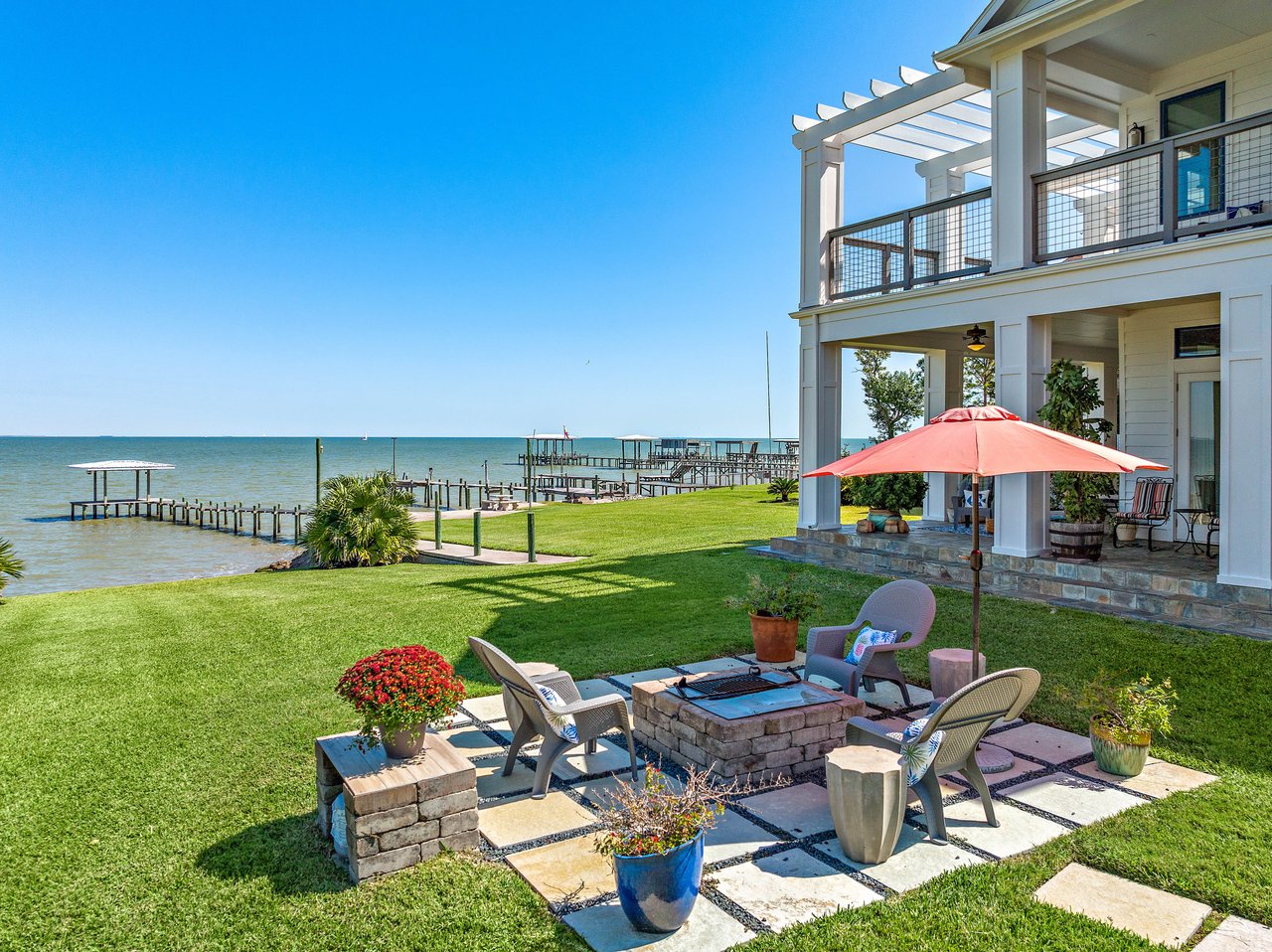
On a Galveston canal or bayfront home, the bulkhead is the quiet structure holding your yard, your dock and much of your value in place. It rarely appears in listing photos, yet it can shape a sale more than any kitchen. Here is what our team wants every buyer and seller in Jamaica Beach, Pirates Cove, Sea Isle, Tiki Island, Bayou Shores and the island's other waterfront neighborhoods to understand.
What a bulkhead does, and how long it lasts
A bulkhead is a retaining wall at the water's edge. The Texas General Land Office describes it as a hard barrier along the shore that waves strike and bounce back from, which can reduce erosion in the right location. Behind it sits the soil that supports your lawn, pool deck and boat lift.
No wall lasts forever. The GLO's guide to living shorelines puts the average lifespan of a hard shoreline structure at only 15 to 20 years. Material matters, and Shore Protect Construction, a Texas marine contractor, gives these ranges with regular upkeep:
- Marine-grade vinyl: commonly 40 to 50 years or more.
- Concrete: 50 to 100 years or more.
- Steel: 40 to 50 years with corrosion protection.
- CCA-treated timber: 15 to 25 years in freshwater, and less in saltwater.
Treat those as best-case figures. Boat wakes, storms and a neighbor's wall deflecting wave energy onto your lot can all shorten a wall's life. A GLO case study at Lafitte's Cove on the West End describes canal erosion driven by failing bulkheads and wave energy from boat traffic.
Warning signs a bulkhead is failing
Much of the trouble begins below the waterline, but the surface usually offers clues. Marine contractors look for:
- Leaning or bowing: a wall that leans, bows or bulges toward the water.
- Open joints: panel joints that have separated or stair-stepped.
- Tie-rod trouble: rusted or loose tie-rods, the anchors that hold the wall back.
- Sinkholes: soft spots or depressions in the lawn behind the cap.
- Water through the wall: water spraying through during heavy rain, a sign of clogged weep holes or filter fabric.
- Scour at the base: erosion at the foot of the wall, which the GLO notes can be reduced with marsh plantings in front of it.
Shore Protect suggests owners walk their wall at least once a year and after any major storm, flood or king tide, with a professional inspection every three to five years.
How to have a bulkhead inspected before you buy
Here is the detail many buyers miss: a standard home inspection may not cover the bulkhead at all. Under the Texas Real Estate Commission's standards of practice, a licensed inspector is not required to inspect docks or waterfront structures. If you want an informed opinion on the wall, you have to ask for one.
During your option period, our team recommends:
- A specialist: a marine contractor, or a structural or coastal engineer, to evaluate the wall, cap, tie-backs and the soil behind it.
- The paper trail: the wall's age, material, repair invoices and any permits or GLO authorizations.
- A view from the water: the face of the wall often tells a different story than the lawn.
- A current survey: the boundary between private land and state-owned submerged land can shift over time.
Who is responsible, and which permits apply
Bulkhead repairs are generally the waterfront owner's to plan and fund, and the paperwork follows the owner. The GLO's residential application, for example, must be signed by the property owner. Before any work begins, expect some or all of the following:
- Texas General Land Office: where a structure extends onto state-owned submerged land, the GLO requires written authorization before any work, including rebuilding or replacing. Its residential packet lists bulkheads among typical structures.
- U.S. Army Corps of Engineers: work in tidal waters generally needs a Department of the Army permit under Section 10 of the Rivers and Harbors Act or Section 404 of the Clean Water Act. Bulkheads are among the bank stabilization methods covered by Nationwide Permit 13, and the current nationwide permits took effect March 15, 2026.
- City of Galveston: the city's permitting page says projects valued at $500 or more typically need a permit.
- Jamaica Beach: the city requires permits for new bulkheads and bulkhead repairs, encourages owners to contact the Jamaica Beach Improvement Committee first, and notes that starting work without a permit doubles the permit fee.
Tiki Island and other communities have their own rules, so confirm locally before work begins.
How bulkhead condition affects price, insurance and resale
- Price and negotiation: a wall near the end of its life is a significant expense, and informed buyers price it in. A recent evaluation and written bids turn an open question into a number both sides can negotiate.
- Cost: Shore Protect's published Texas and Gulf Coast pricing, updated July 2026, runs $120 to $350 per linear foot for repairs and $150 to $600 per linear foot for full replacement. Every site differs, so gather more than one bid.
- Insurance: the standard flood insurance dwelling policy lists bulkheads and seawalls as property not covered, and TWIA covers only wind and hail, not storm surge or flood. Plan on the wall being yours to maintain, and while you review coverage, confirm the home's windstorm certificate as well.
- Resale: a well-documented, permitted wall reads as a premium feature to the next buyer.
For sellers: prepare the wall before you list
The most confident waterfront listings answer the bulkhead question before it is asked. Gather the wall's age, material, invoices and permits, and consider a pre-listing evaluation. Texas also requires a coastal area notice for property adjoining tidally influenced submerged land, which states that any structure on or over state-owned submerged land requires proper permission. A clean permitting history keeps that conversation simple.
Bulkhead checklist for buyers and sellers
- Walk the wall from the yard and, if possible, from the water.
- Note any leaning, open joints, rusted tie-rods or sinkholes.
- Collect the age, material, repair records, permits and any GLO authorization.
- Book a marine contractor or engineer during the option period.
- Confirm which permits apply: GLO, Army Corps and the city.
- Get at least two written bids before negotiating repairs or credits.
- Review flood and windstorm coverage with your insurance agent.
Frequently asked questions
How long does a bulkhead last in Galveston?
It depends on material and exposure. The GLO puts the average hard shoreline structure at 15 to 20 years, while one Texas marine contractor cites 40 to 50 years or more for well-maintained vinyl and 15 to 25 years for treated timber in freshwater, less in saltwater.
Does a home inspection include the bulkhead in Texas?
Not necessarily. TREC's standards of practice do not require inspectors to inspect docks or waterfront structures, so hire a marine contractor or engineer separately.
Do I need a permit to repair a bulkhead in Galveston?
Often, yes. Depending on location, you may need GLO authorization for work on state-owned submerged land, an Army Corps permit, and a local permit; Jamaica Beach requires permits for bulkhead repairs.
Does flood insurance cover bulkhead damage?
The standard flood insurance dwelling policy lists bulkheads and seawalls as property not covered, and TWIA covers only wind and hail. Ask your agent what your specific policies include.
Who pays for bulkhead repair when buying a house?
It is negotiable. Once an evaluation and bids are in hand, buyer and seller can agree on a repair before closing, a credit or a price adjustment.
Buying or selling on the water with our team
Waterfront homes reward those who know what lies beneath the surface. Our team walks the wall, gathers the records and brings in the right specialists so every decision is made with clarity. Call our team at (409) 771-2859 to talk through a canal or bayfront home in Galveston.
Caroline Spagnola, Spagnola Realty Group
Sources: Texas General Land Office, A Guide to Living Shorelines in Texas (September 2020) and Living Shorelines Visual Site Assessment page (read November 27, 2026); Texas General Land Office, Coastal Leasing and Easements page and Residential Application Packet (pier requirements revised March 2013, read November 27, 2026); Shore Protect Construction, Bulkhead Maintenance and Bulkhead Repair Cost pages (updated July 2026); Texas Real Estate Commission, Standards of Practice, 22 Texas Administrative Code 535.227 (amended effective February 1, 2022); Texas Real Estate Commission, Addendum for Coastal Area Property, TREC No. 33-2 (December 5, 2011); U.S. Army Corps of Engineers, Galveston District Regulatory page (read November 27, 2026) and Galveston County Nationwide Permit verification (May 8, 2020); Federal Register, Reissuance and Modification of Nationwide Permits (January 8, 2026); City of Galveston, Building Codes and Permitting page (read November 27, 2026); City of Jamaica Beach, Building Department page and Kendal's Korner (read November 27, 2026); FEMA, NFIP Claims Review course IS-1104, Lesson 3, and FloodSmart, What Flood Insurance Covers (read November 27, 2026); Texas Department of Insurance, TWIA consumer guide (April 24, 2025). This article is general information, not legal or engineering advice.