Few neighborhoods in Texas ask as much of a homeowner, or give back as much, as Galveston's East End Historic District. This is a place where the front porch is a living room, where a neighbor can tell you which house rode out the 1900 Storm, and where a window replacement can need city approval. We've helped buyers and sellers through these blocks for years, including the sale of an 1874 guest house at 523 10th Street. This guide covers what we tell our own clients before they fall in love with a Victorian on a tree-lined street.
Life in the East End combines a coastal beach town with a living museum. You're a short walk or bike ride from the Seawall and Gulf beaches to the south, and from the restaurants, galleries, and nightlife of The Strand to the west. Most residents run errands, get coffee, and head downtown without starting the car.
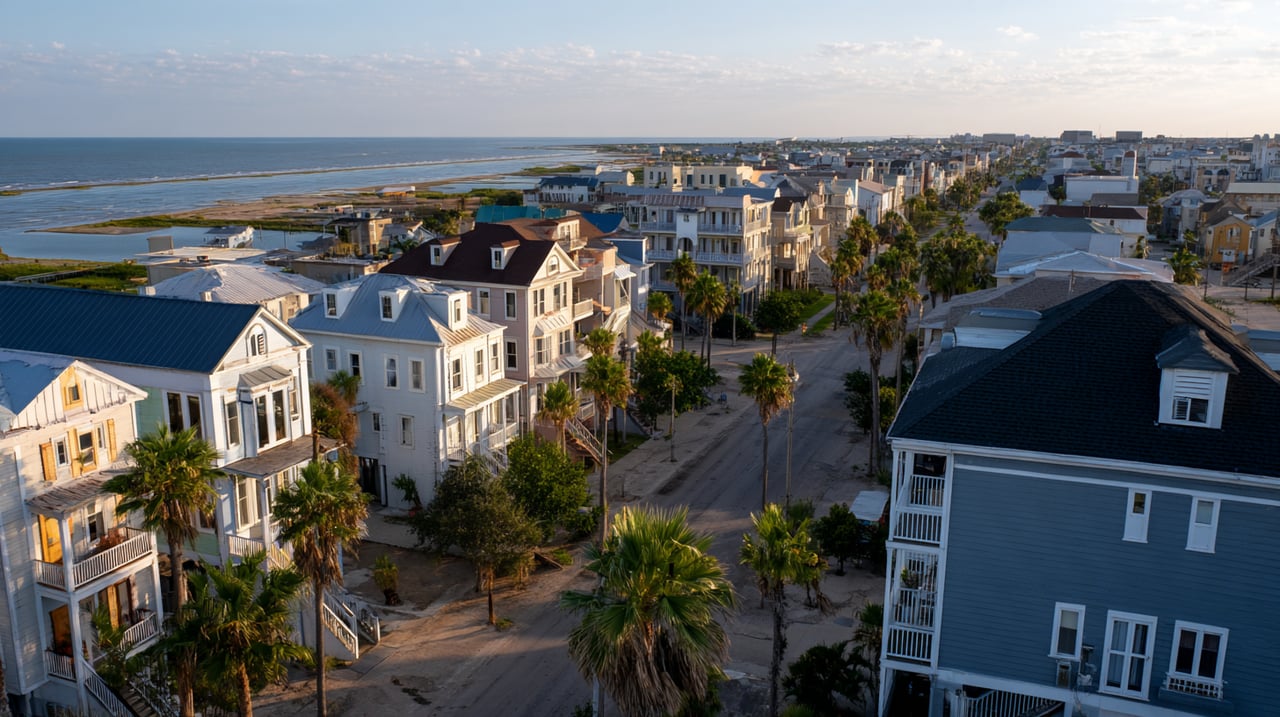
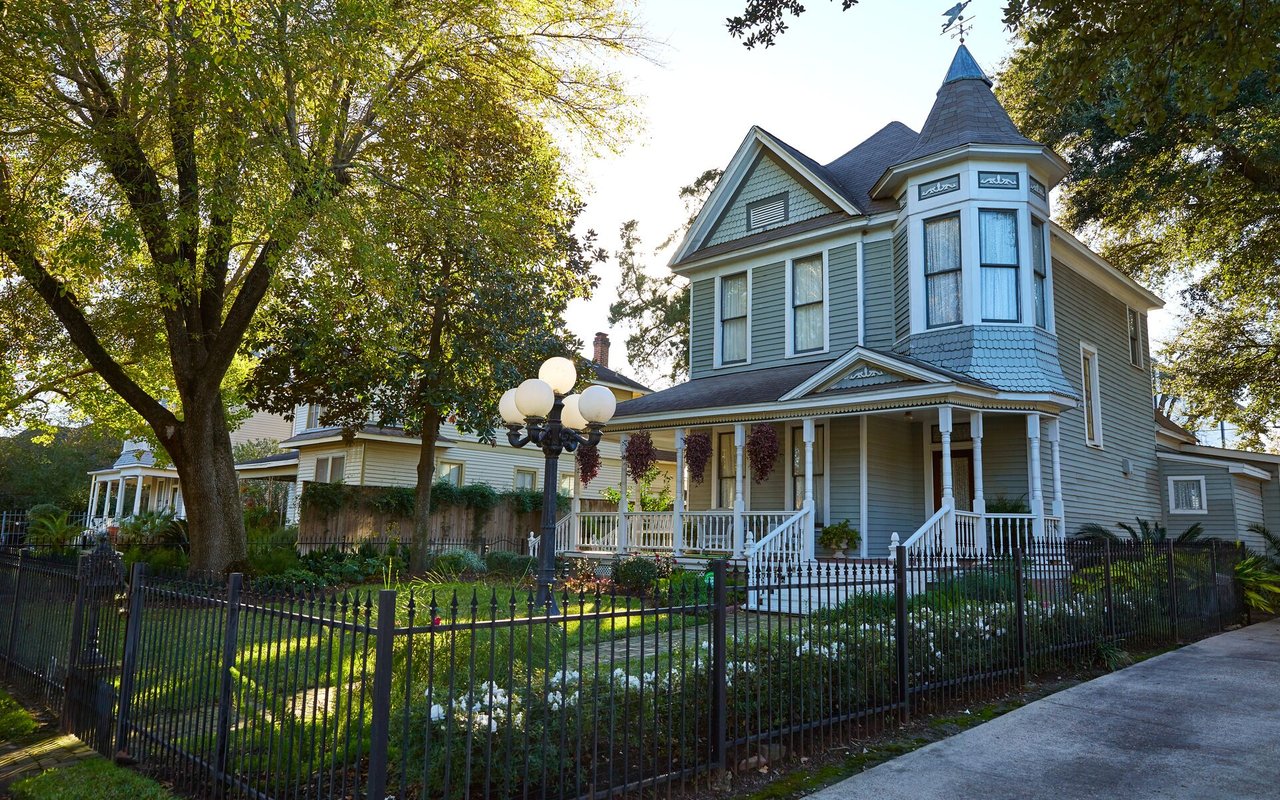
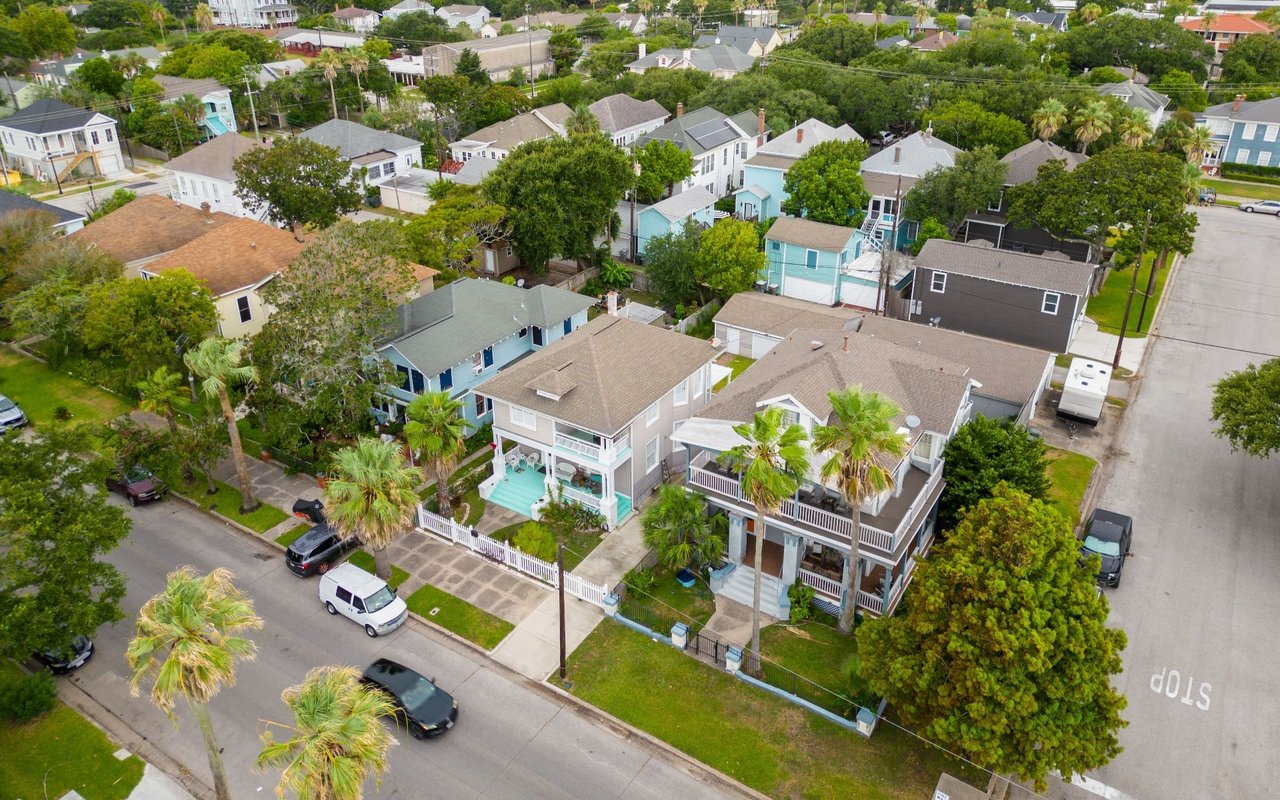
The streetscape is what people notice first. Gas lamps, wrought-iron fences, and double-decker porches (locals call them "galleries") line the blocks. Here and there you'll come across carved sculptures made from trees killed by Hurricane Ike's saltwater surge in 2008. Neighbors stay connected through the East End Historic District Association, which runs home and garden tours, block parties, and community garden events.
The trade-off is responsibility. A home built in the 1800s needs steady maintenance and skilled tradespeople who know heart-pine siding and old wood windows. It also needs carefully planned flood and windstorm insurance. Exterior changes go through the Galveston Landmark Commission. Buyers who go in expecting all of this tend to be the happiest owners in the neighborhood.
In the mid-to-late 1800s, Galveston was the leading port on the Gulf Coast and was often called the "Wall Street of the South." The cotton brokers, merchants, and shipping magnates who made their fortunes on the wharves built their homes in the East End, and they competed with each other through architecture. Bishop's Palace, finished in 1892 on Broadway, is the best-known result.
The Great Storm of September 1900 destroyed thousands of buildings across the island. Many East End homes survived thanks to heavy brick and dense timber framing. During the grade-raising project that followed, houses were lifted on jacks while sand slurry was pumped underneath, raising the ground beneath them by several feet. When you see a home that sits noticeably high off the street today, that history is usually the reason.
After decades of economic decline, local preservationists organized through the Galveston Historical Foundation to stop demolitions. The East End became a local historic district in 1970, was listed on the National Register of Historic Places in 1975, and was declared a National Historic Landmark in 1976, one of the few residential neighborhoods in the country with that designation.
Today the district covers roughly 150 acres between Broadway and Market Street, from 9th to 19th Street, with more than 550 buildings. It holds the largest intact collection of 19th-century homes in Texas: Greek Revival houses from the 1850s, like the 1852 Cherry house, alongside the Victorians that architects Nicholas Clayton and Anton Korn designed for the island's merchant families. It was also the center of Galveston's Black community and its churches and institutions, and several of those landmarks still stand.
The East End holds one of the largest concentrations of 19th-century residential architecture in the United States. Many styles appear here, and knowing them helps you judge a listing and plan restoration costs.
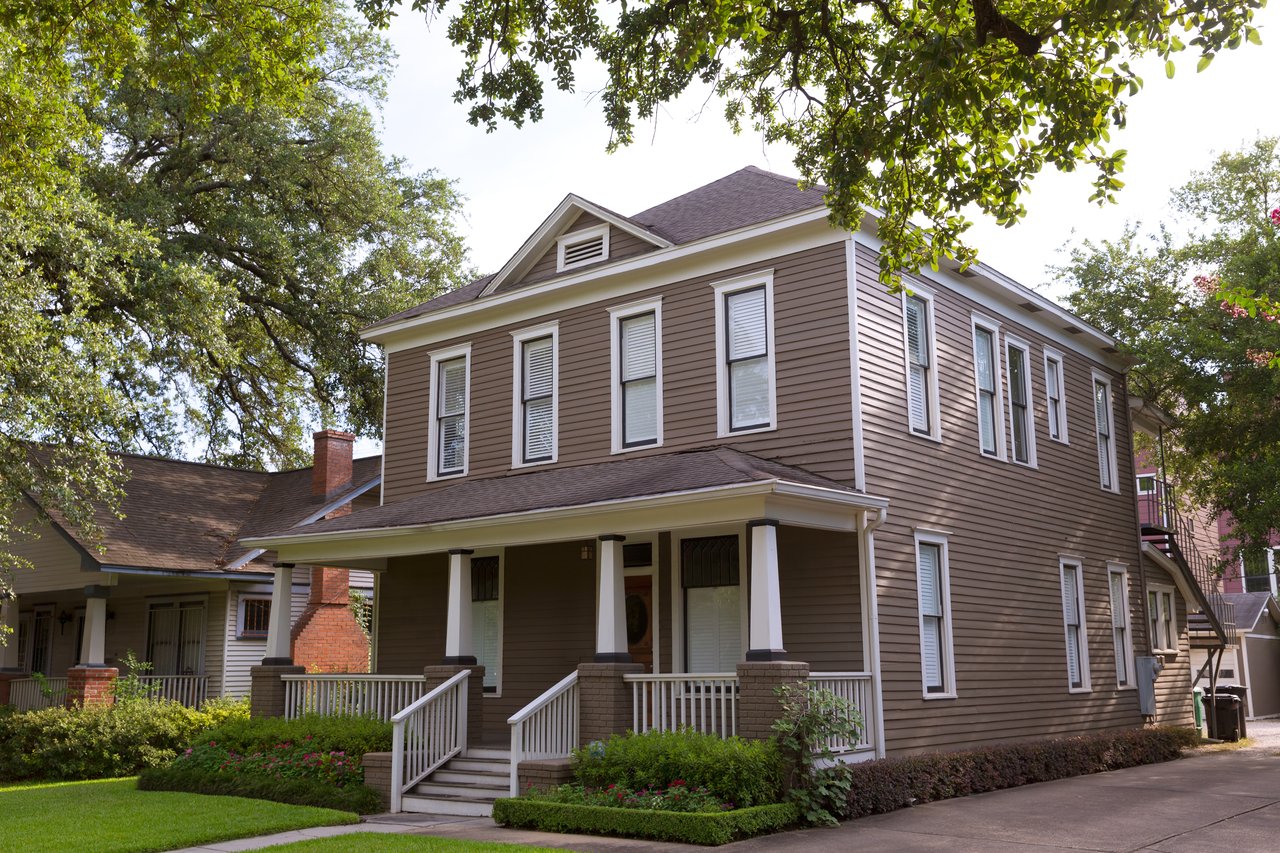
Queen Anne homes are the showpieces: asymmetrical layouts, steep roofs, wraparound galleries, turrets, and detailed gingerbread trim. Greek Revival homes are symmetrical and formal, often with full-height columned porticos that recall antebellum Southern design. Italianate homes have low-pitched roofs, bracketed eaves, and tall, narrow, often arched windows. Gothic Revival and Colonial Revival details show up on everything from modest cottages to grand residences, with pointed arches, decorative bargeboards, and balanced window layouts.
Style affects more than looks. A Queen Anne with original millwork costs more to maintain than a simple raised cottage, and owners need to plan for that.
Homes for sale in the East End generally fall into four groups:
Inventory is limited, and the best-restored homes often sell through agent networks before most buyers see them online. If you want an East End home, tell us early what you're looking for so we can alert you when one becomes available.
Prices depend on three main factors: the level of restoration, the home's size, and how close it is to Broadway, The Strand, or the beach.
Market Metric | Typical Range | What It Means for You |
|---|---|---|
Median listing price | ~$500,000 – $555,000 | The center of the market, usually a well-kept mid-size historic home |
Price per square foot | ~$250 – $270 | Unrestored homes sell lower; fully modernized estates sell higher |
Full price spectrum | ~$275,000 – $1,500,000+ | Cottages start under $350K; grand multi-story estates exceed $1M |
Days on market | ~75 – 110 days | Historic inspections, specialized lending, and insurance quotes slow the timeline |
The longer days-on-market figure doesn't indicate weak demand. It reflects the extra due diligence these homes require. For buyers, that often means room to negotiate. For sellers, it means pricing and presentation have to be right from the first day.
Rental potential also matters. Many properties have carriage houses or guest units that can be long-term rentals, and some can operate as licensed vacation rentals where local rules allow. As investment property owners ourselves, we can help you work out realistic rental numbers before you commit.
The Galveston Landmark Commission is there to keep the neighborhood's historic character intact, not to block reasonable updates. Knowing what needs approval keeps projects on schedule and on budget.
Exterior work visible from the street generally needs a Certificate of Appropriateness or administrative staff review before permits are issued. That covers changes to siding, windows, doors, shutters, and decorative trim; additions, garages, decks, and outbuildings; fences, masonry walls, and porch railings; and roof replacements, chimney repairs, and structural elevation work.
The main principle is repair before replacing. Original wood windows, porch columns, and heart-pine siding should be repaired with matching materials whenever possible rather than replaced with modern synthetics.
Residential paint colors are generally not regulated the way they are in commercial districts like The Strand. Interior projects such as kitchens, bathrooms, plumbing, and electrical work don't go through Landmark Commission review, though standard city building permits still apply. Rules can change, so confirm current requirements with the City of Galveston before starting work.
Owners who take on substantial rehabilitation may qualify for local property tax exemptions or state historic preservation tax credits, which can offset a meaningful share of renovation costs. We regularly work with civil engineers, architects, and surveyors, and we can connect you with the right professionals before you make an offer.
The East End Historic District covers more than 50 city blocks just east of downtown Galveston. It runs roughly from Mechanic Street (Avenue C) on the north to Broadway (Avenue J) on the south, and from about 10th/11th Street on the east to 19th Street on the west.
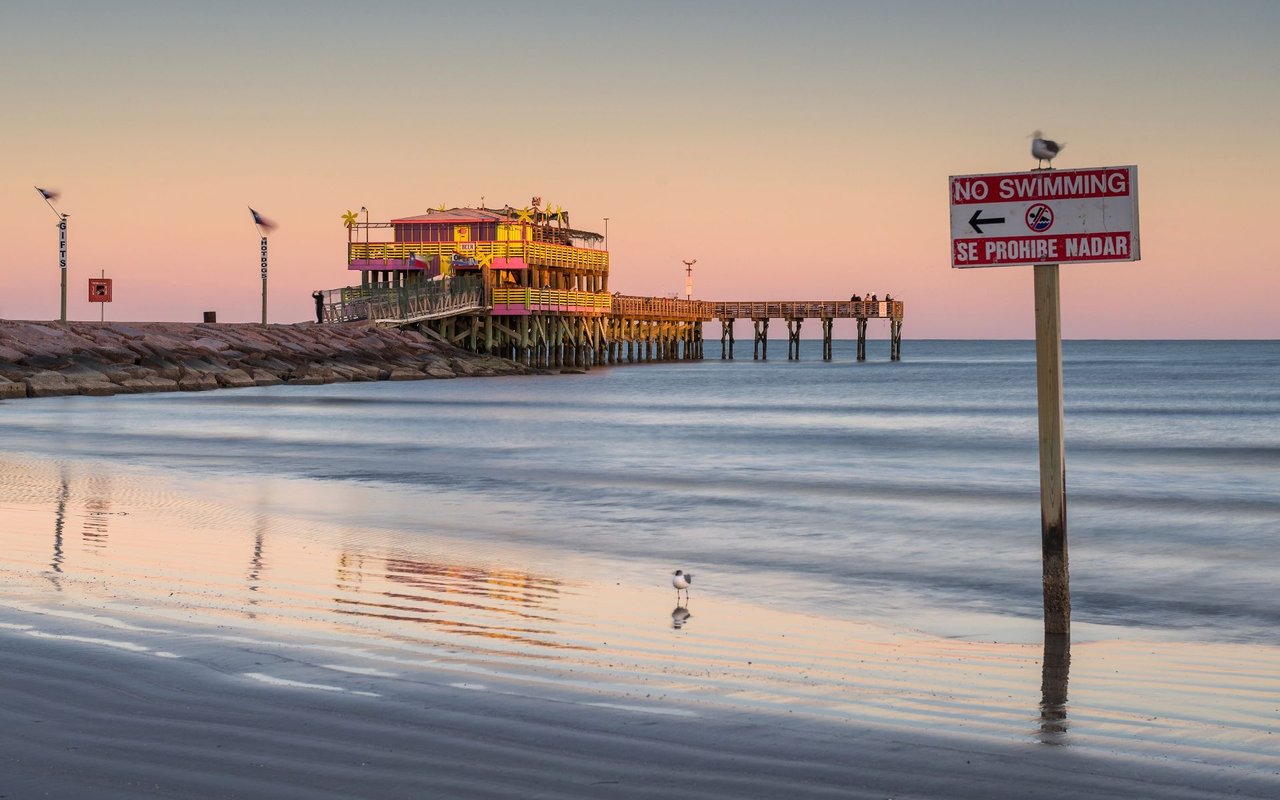
That location puts you between the island's three main draws. The Strand and the Postoffice Street arts corridor are to the west. The Seawall and Gulf beaches are a short trip south. The Galveston Channel waterfront is just north. Broadway along the southern edge connects you directly to the causeway and the mainland.
Bishop's Palace, at 1402 Broadway, is Galveston's most famous house. The stone mansion offers self-guided audio tours of its stained glass and woodwork. Just west of the district, The Bryan Museum displays Southwestern art, historic firearms, and artifacts from Texas history.
Within the neighborhood, the Galveston tree sculpture tour turns an ordinary walk into a small treasure hunt, with carvings standing in yards and along public easements.
For the outdoors, the Seawall promenade and Gulf beaches are close by to the south. On the island's eastern end, the East End Lagoon Nature Park & Preserve offers about 700 acres of coastal marsh for birdwatching, kayaking, and trails, and it's very close to home.
East End residents have Galveston's best dining districts within walking distance.
For Gulf seafood, Katie's Seafood House at Pier 19 serves fish brought in at nearby docks, Shrimp 'N Stuff is a local favorite for po'boys and fried baskets, and BLVD Seafood on Seawall Boulevard offers a more modern menu with craft cocktails. For a night out, Rudy & Paco near The Grand 1894 Opera House serves Central and South American-influenced steak and seafood.
Closer to home, Sunflower Bakery & Cafe is a neighborhood breakfast spot, and La King's Confectionery on The Strand is a vintage soda fountain where you can watch saltwater taffy being pulled by hand.
For shopping, the Postoffice Street Arts & Antiques District has 19th-century furniture, maritime antiques, and architectural salvage, which is useful when you're hunting for period-correct hardware. The Strand has independent boutiques, galleries, and coastal home decor shops, and the Galveston Arts Center sells work by Texas artists.
The island's calendar runs right past East End front porches. Each May, the Galveston Historical Foundation's Historic Homes Tour opens private 19th-century homes to the public, often including East End Victorians. For prospective buyers, it's a rare chance to see these interiors. The neighborhood association also hosts its own East End garden and cottage tour, which features courtyards, cottages, and the tree carvings.
In winter, Mardi Gras! Galveston, one of the largest Mardi Gras celebrations in the country, fills The Strand with parades and balcony parties just blocks away. In December, Dickens on The Strand turns downtown into Victorian London, with costumed vendors, carolers, and parades. Throughout the year, the downtown ArtWalk brings galleries along Postoffice Street and beyond open for evening art walks every several weeks.
The East End is served by Galveston Independent School District, which uses a choice and magnet model. Families can apply to specialized programs at the elementary and middle school levels instead of being assigned to a single campus. All public high school students attend Ball High School, the island's public high school, known for its STEM pathways, dual-credit options, AP courses, and media and digital technology programs.
Private and charter options include Trinity Episcopal School (PK–8), Holy Family Catholic School (PK–8), O'Connell College Preparatory School (9–12), and the public charter schools Odyssey Academy and Ambassadors Preparatory Academy. Enrollment rules and magnet application deadlines change, so check directly with GISD and each school.
On the island, the East End is one of the easiest places in Galveston to live without relying on a car. The flat grid, wide sidewalks, and short distances mean many residents walk or bike to downtown offices, The Strand, and UTMB. Galveston Island Transit runs local bus routes, and the Galveston Island Trolley links downtown, The Strand, and the Seawall.
For trips off the island, Broadway leads straight to the causeway and I-45.
Destination | Distance | Typical Drive Time |
|---|---|---|
Downtown Houston | ~50 miles | 50–60 min (75–90 min at peak times) |
Texas Medical Center | ~50 miles | 50–65 min via I-45 and Hwy 288 |
Hobby Airport (HOU) | ~40 miles | 40–50 min |
Bush Intercontinental (IAH) | ~70 miles | 70–90 min |
Summer weekend beach traffic on I-45 is real, so plan Houston trips accordingly.
Buying or selling in the East End takes more than a standard real estate transaction. It takes someone who understands Landmark Commission approvals, historic-home inspections, windstorm insurance, and what a restored Queen Anne is actually worth. Caroline Spagnola is an Accredited Luxury Home Specialist with seven years of direct experience in the Galveston and Houston markets. She also owns investment property herself, and she brings in engineers, architects, and surveyors when a property calls for it. Whether you're relocating from out of state, looking for an income property with a carriage house, or preparing to sell a family home, the Spagnola Realty Group team of Caroline Spagnola, Federica Fileccia, and Leonard Scott will guide you from the first showing through closing day and after. Reach out today to start your search for the right East End home.
Whether buying or selling, we're here to guide you. Connect with Spagnola Realty Group today to discover how we can make your real estate experience seamless and rewarding.