Few places in Texas carry the weight of Galveston. It's an island that has earned its complexity over centuries, shaped by prosperity, catastrophe, and an almost stubborn will to endure. For buyers coming from The Woodlands, Sugar Land, Memorial, Dallas, or Austin, Galveston offers something no inland suburb can replicate: genuine coastal character, walkable history, and a waterfront real estate market that rewards the buyer who takes the time to understand it.
This guide is written for buyers and sellers who are serious about the island. Whether you're searching for a bayfront retreat, a luxury condo steps from the Gulf, or a second home that works as hard as you do, what follows will give you the full picture, without the noise.
Galveston's real estate market cannot be understood without its history, and its history is not subtle. In the late 1800s, this island was the most important port on the Western Gulf Coast. Texas's first post office, first opera house, and first telephone exchange were all established here. It was so commercially dominant that it earned the title "Queen City of the Gulf," and the architecture it produced during that era is still standing in the East End today.
The Great Storm of 1900 changed everything. It remains the deadliest natural disaster in American history. Rather than abandon the island, residents responded by raising thousands of buildings on fill and constructing the massive Seawall that now defines the Gulf-side coastline. That response is not just local lore. It speaks directly to the character of Galveston's built environment and to the resilience premium that serious buyers recognize when they study the market.
The "BOI" identity, Born on the Island, is a real cultural force here. It shapes everything from neighborhood dynamics to how local vendors treat long-term owners versus seasonal visitors. Understanding that distinction matters if you plan to become a meaningful part of the community rather than just a mailbox on a deed.
For a deeper look at how Galveston's past connects to its present real estate market, read The Rich History and Thriving Real Estate Market of Galveston.
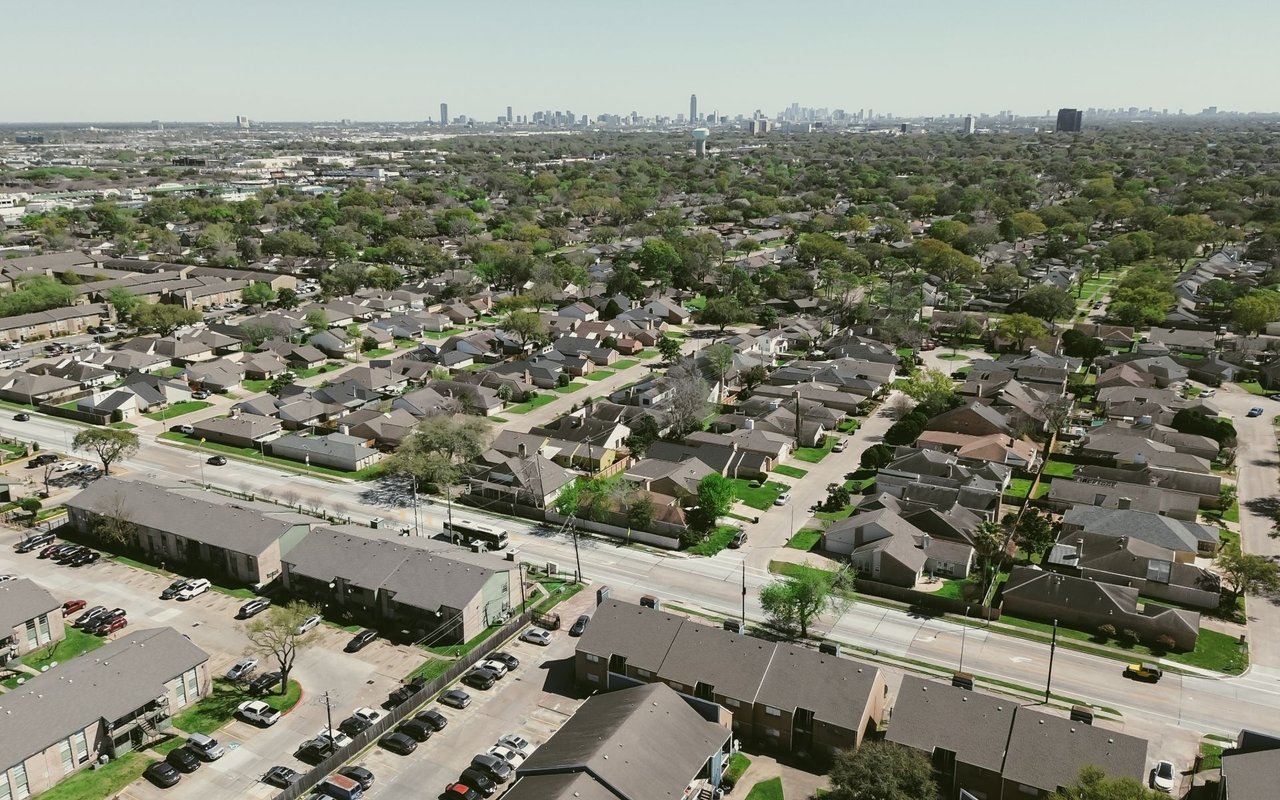
Galveston is not a single neighborhood with a beach attached to it. It's a 32-mile barrier island with distinct communities, each with its own price profile, lifestyle, and buyer profile. Knowing the difference before you start touring saves significant time.
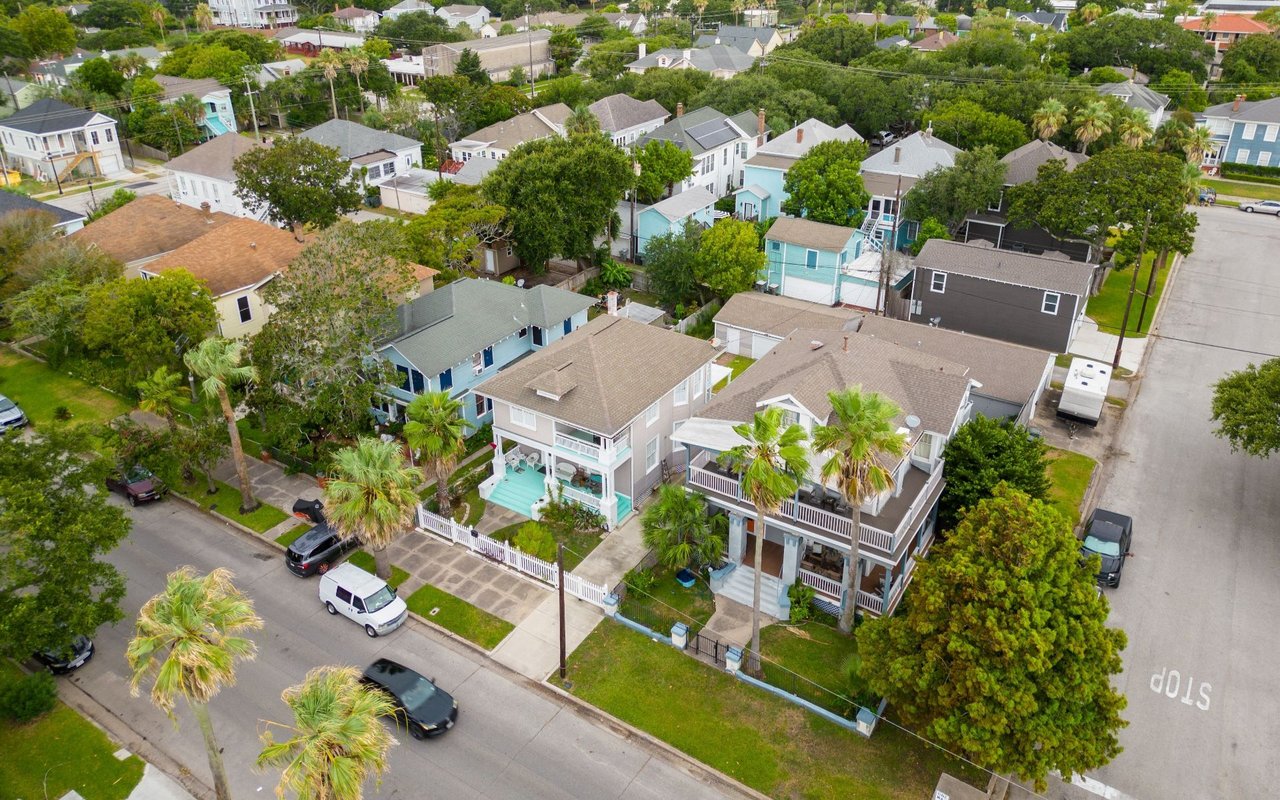
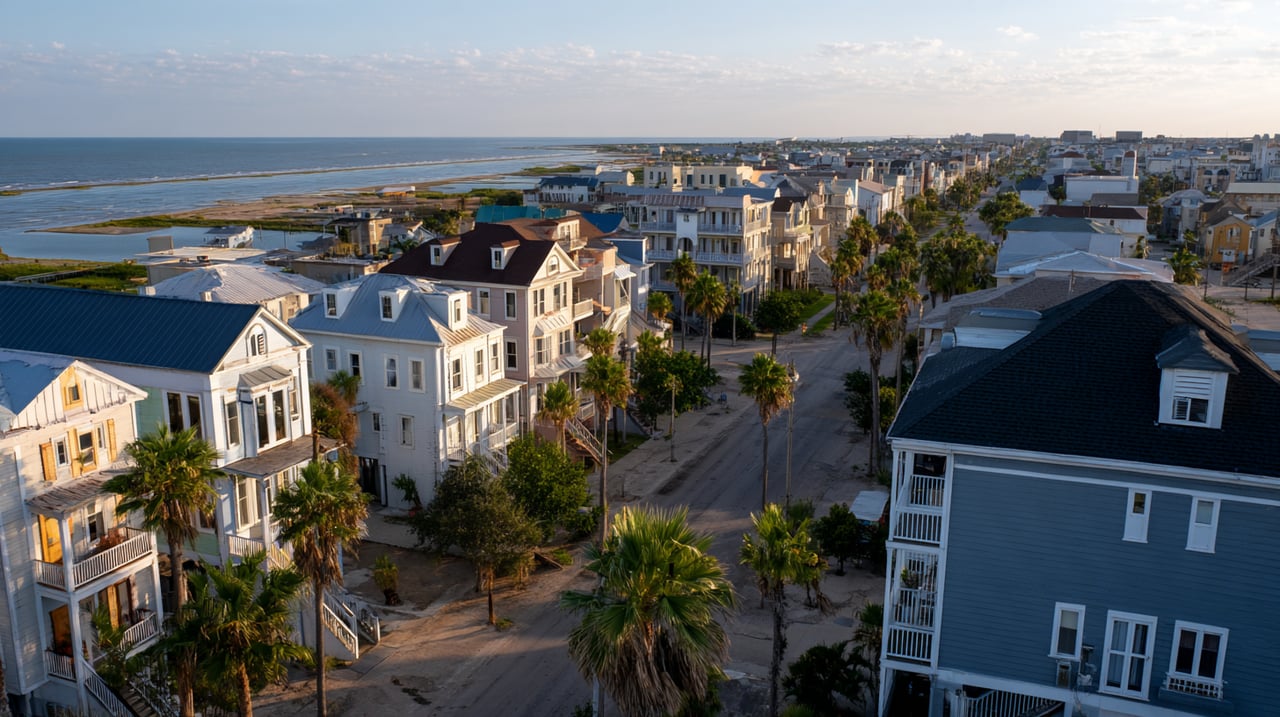
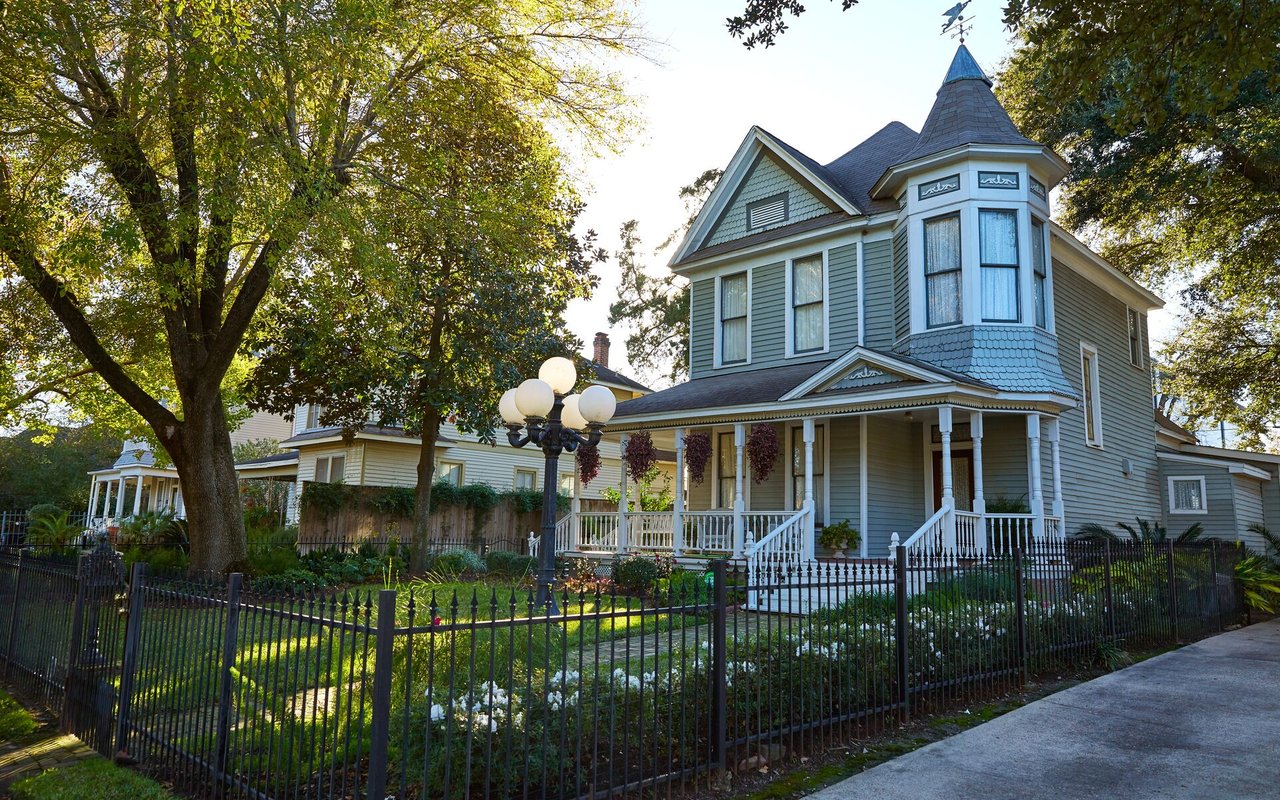
The East End Historic District is where Galveston's 19th-century wealth is still on display. The 50-block district is filled with Victorian architecture, wraparound porches, and the intricate "gingerbread" woodwork that defines the era. The Bishop's Palace, a stone fortress of layered luxury, anchors the district architecturally. After Hurricane Ike, artists carved the dead tree stumps throughout the neighborhood into sculptures that have become unofficial landmarks. The vibe is walkable, quiet, and deeply intentional. Residents here tend to be preservationists, university professionals connected to UTMB, and buyers who want substance over spectacle. This is not a flip market.
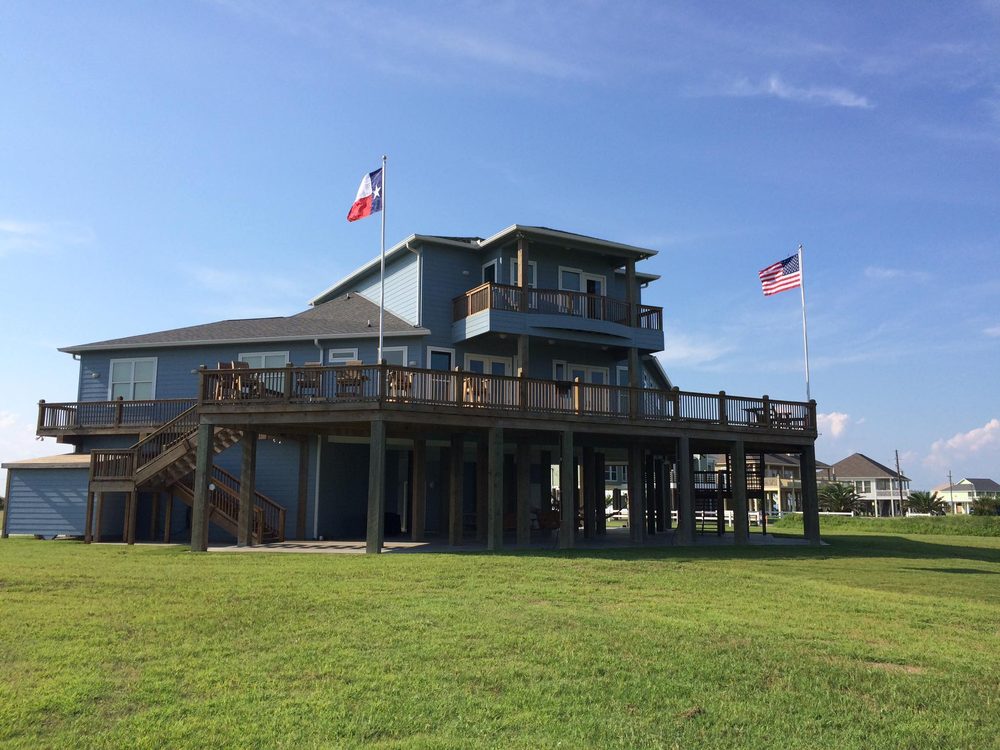
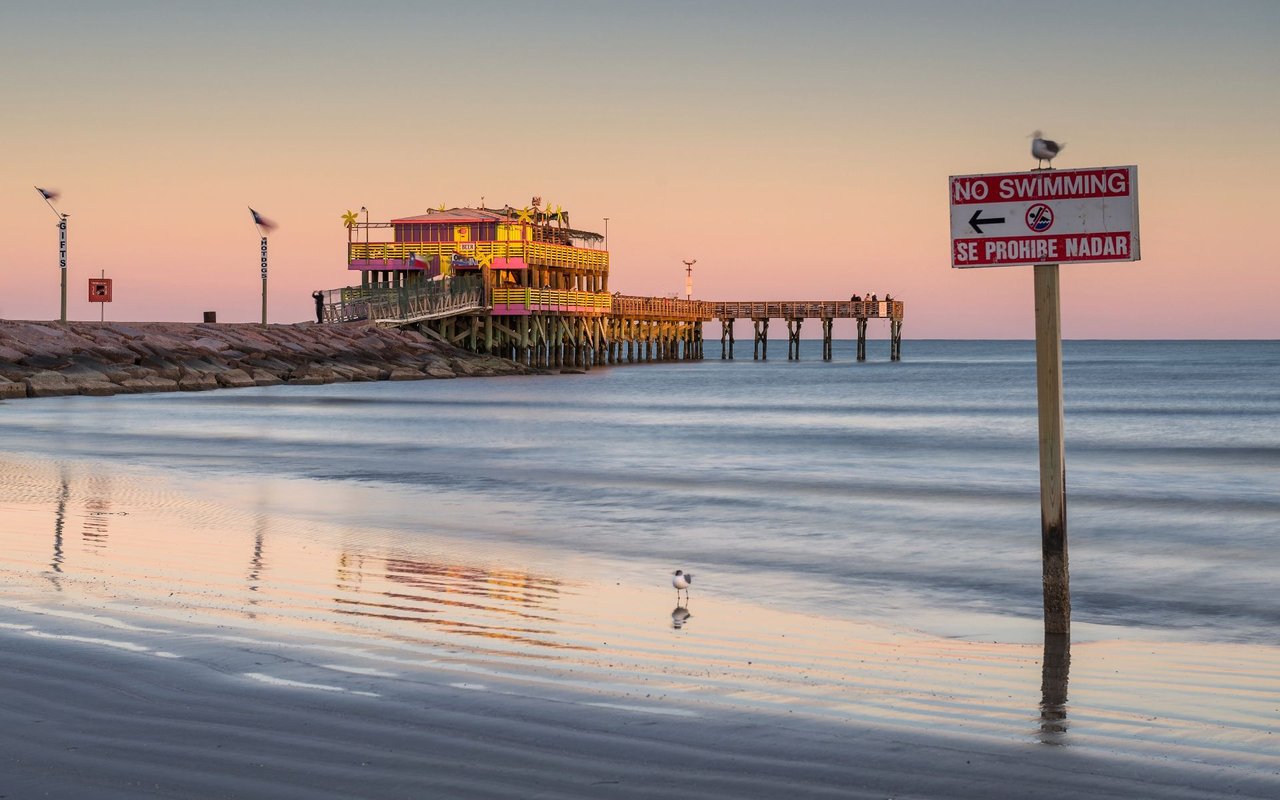
The West End begins where the Seawall ends, and that's the point. As the urban density of the city center gives way, the sky opens, the lots get larger, and the beach houses on stilts take over. Jamaica Beach, a small independent city within the island, sits out here with its own laid-back rhythm and a permanent-vacation atmosphere that attracts buyers who prioritize privacy over proximity to restaurants. Galveston Island State Park spans from the Gulf to the bay at the West End, offering four miles of hiking and biking trails, kayak fishing, and dune boardwalks that most mainland markets simply cannot compete with.
The Strand and Waterfront District is Galveston's original commercial core, where cotton was once traded for gold out of massive brick warehouses. Those warehouses are now lofts, boutiques, and bars. The Tall Ship Elissa, an 1877 square-rigger docked at Pier 21, sits alongside the growing cruise infrastructure that is actively reshaping the economics of this corridor. This is the most dynamic part of the island in terms of development activity right now.
For a closer look at the architecture and character of the East End, read Architectural Styles of Galveston's East End Historic District. For a ground-level view of everyday life on the opposite end of the island, read What It's Like to Live in Galveston's West End.
This is the most consequential decision a Galveston buyer makes, and it's worth slowing down on. The Gulf side and the bay side are not interchangeable. They attract different buyers, support different lifestyles, and carry different ownership costs.
Beachfront properties on the Gulf side command a tourist premium. Short-term rental demand is higher, sunrise views are iconic, and the Seawall creates a built-in recreational corridor. The tradeoff is maintenance intensity. Salt spray from direct Gulf exposure is relentless on HVAC systems, paint, and any exposed metal. Buyers underestimate this cost regularly, and it shows up at resale.
Bayfront properties on West Bay attract a different buyer entirely. The water is calmer, the sunsets are exceptional, and most homes feature private boat docks, making "dock-to-dish" living a genuine lifestyle rather than a marketing phrase. Serious boaters almost always choose the bay side. The environment is slightly less corrosive than direct Gulf exposure, though marsh maintenance and mosquito management become part of the ownership equation. Appreciation dynamics between the two waterfronts have also shifted in recent years, with bayfront and canal-front properties attracting more long-term resident buyers and less short-term rental turnover.
For a detailed breakdown of both markets, read Beachfront vs. Bayfront Living in Galveston and Canal Front Living in Galveston: A Buyer's Guide.
Galveston's condo market in 2026 is firmly a buyer's market. Inventory has surged, and a meaningful portion of that supply consists of former short-term rentals whose owners are exiting the market after several years of compressed returns. For qualified buyers, that creates negotiating leverage that hasn't existed on this island in years.
The luxury end of the condo market has matured considerably. Modern developments now offer what can genuinely be called a vertical resort experience: floor-to-ceiling glass, negative-edge pools, wine tasting rooms, private beach access, and concierge services. Three buildings consistently lead the conversation among luxury condo buyers:
Median condo pricing for standard units runs between $206,000 and $250,000 in 2026, while luxury beachfront penthouses can exceed $1 million. The number buyers frequently overlook, however, is total carrying cost. TWIA windstorm insurance premiums and HOA fees have both risen due to coastal maintenance demands. Any serious underwriting of a Galveston condo purchase needs to account for all three: mortgage, insurance, and HOA.
For more on what to look for in specific buildings and locations, read Galveston Condos With Resort-Style Amenities and Deciding the Right Location for Your Galveston Condo.
After several years of compressed inventory and aggressive pricing, the Galveston residential market has shifted toward the buyer. Average home values sit around $314,000 in 2026, reflecting an approximately 8% decline over the prior year. Homes are spending an average of 120 days to pending, giving buyers considerably more room to negotiate than they had in 2021 or 2022. Active inventory has climbed above 1,000 listings.
The counterintuitive data point is rental rates. While sale prices have softened, rental rates are up over 6% year over year. For buyers approaching Galveston as a hold investment, that spread creates a compelling case for entry.
The larger story is what's happening at the port. Galveston is now the fourth-busiest cruise port in the United States. In 2026, the port is projecting 4 million passenger movements across 445 sailings. Terminal 16, home to MSC Cruises, is newly operational. A fifth terminal at Pier 14 is planned by 2030, with a long-term buildout goal of accommodating seven ships simultaneously. Paired with 600,000 square feet of new retail, hotel, and restaurant development planned along Harborside Drive to serve cruise traffic, the port expansion is actively reshaping the economics of nearby neighborhoods in ways that long-term buyers should be tracking closely.
For insight into how this growth affects residential demand, read How Cruise Growth Is Shaping Galveston Housing Demand. For guidance on timing your entry into this market, read How to Determine the Right Time to Buy a Home in Galveston.
The majority of serious buyers in Galveston right now are arriving from The Woodlands, Sugar Land, Memorial, Austin, and Dallas. Remote purchasing on a barrier island requires a different due diligence framework than buying anywhere on the mainland, and buyers who don't adjust for that tend to encounter expensive surprises after closing.
The insurance picture is more complex than most buyers expect. A standard homeowner's policy covers fire, theft, and liability, but on Galveston Island you will almost certainly need two additional policies: TWIA windstorm coverage for hurricane and wind damage, and a separate flood insurance policy. FEMA flood maps for the island are updated periodically, and lenders will require flood coverage regardless of a property's historical flood record.
Use the option period aggressively. Texas real estate contracts include an option period, typically 7 to 10 days, that gives buyers the unrestricted right to terminate for any reason. For remote buyers, this window is the time to either fly in personally or hire an inspector who specializes in coastal mitigation, someone who knows how to assess salt-air corrosion on HVAC systems, structural pier and beam conditions, and roof integrity specific to coastal wind exposure.
Property taxes require real attention. Texas carries no state income tax, but Galveston property taxes run between 1.5% and 1.8% of assessed value annually. In HOA-governed communities and condo buildings, those fees add another layer that can substantially affect your monthly carrying cost. For older homes in the East End, request the Elevation Certificate. That document determines your flood insurance premium and establishes exactly how the property's lowest floor relates to base flood elevation.
For a comprehensive walkthrough of the remote buying process, read Remote Buying in Galveston: How Out-of-Town Buyers Can Succeed.
For many buyers in Galveston's feeder markets, the purchase equation is a hybrid: a personal retreat that offsets its own costs through short-term rental income. The 2026 data supports that strategy selectively, but execution matters more now than it did three years ago.
Seasonality is pronounced. Average monthly STR revenue peaks above $8,000 in July and can fall below $1,500 in January. That swing requires either strong cash reserves or a management strategy built around annual leaseholders filling the off-season gaps. The properties best positioned for rental performance right now are 5-plus bedroom homes. They represent less than half the overall inventory, face less saturation, and command nightly rates that can outperform smaller units by a significant margin. One- and two-bedroom units make up over 55% of the active rental market, which means competition in that segment is real.
The regulatory and tax framework is worth knowing before you close. Galveston levies a 15% Hotel Occupancy Tax on STR revenue: 9% to the city, 6% to the state. STR operators are required to register annually for $250 and must display their GVR number on all listing platforms. The island's overall STR occupancy rate currently sits around 27%, which means differentiation at the property level is the variable that separates top performers from average ones. Private pools, elevator access, and high-end outdoor kitchens are no longer upgrades; they're baseline expectations for buyers who want strong nightly rates.
For a full breakdown of the income and expense picture, read Using Your Galveston Second Home for Occasional Rental and Budgeting for a Galveston Second Home.
Building on Galveston Island introduces financing complexity that does not exist in most mainland markets, primarily because of the island's V-Zone and AE-Zone classifications. These are FEMA-designated areas subject to high-velocity wave action and base flood requirements that directly affect what lenders will approve and on what terms.
Most buyers financing a new build use a single-close construction-to-permanent loan. You close once, the lender disburses funds to the builder in draws tied to construction milestones (pilings driven, framing complete, etc.), and the loan converts automatically to a conventional 15- or 30-year mortgage at completion. This structure limits closing costs and removes the uncertainty of re-qualifying once construction wraps.
Two technical requirements stand out for island construction. First, lenders enforce strict freeboard standards, meaning the height of the first floor above base flood elevation. A home that doesn't meet those thresholds won't qualify for flood insurance, and without flood insurance there is no loan. Second, the Texas Department of Insurance requires a Windstorm Inspection (WPI-8) certifying that the home was built to coastal wind codes. This certification is not optional. It determines access to TWIA coverage, which is the foundation of the entire insurance stack on the island.
On the appraisal side, buyers building modern elevated homes in neighborhoods of older construction should be prepared for a potential gap between construction cost and appraised value. Comparables don't always reflect the cost of high-specification coastal building, which means some buyers use bridge financing or supplemental equity to close that gap.
For 2026, the FHA loan ceiling in the Galveston market is approximately $1,249,125 for single-family homes. Many builders are also offering rate buydowns, contributing up to 3% of the purchase price to reduce the buyer's interest rate for the first two to three years. For buyers whose rental income will take time to stabilize, that concession can meaningfully affect early cash flow.
Read more at How to Finance Elevated New Builds in Galveston.
Selling in 2026 requires a fundamentally different approach than it did three or four years ago. With active inventory exceeding 14 months of supply and the median days on market stretching toward 146, properties that are priced aspirationally or presented without professional media are not just sitting longer. They're accumulating the stigma of a stale listing, which triggers buyer skepticism regardless of the underlying property quality.
The presentation standard has shifted. Galveston buyers, particularly those arriving from Houston's western suburbs, are doing the majority of their research on a screen before they ever set foot on the island. Listings with drone footage showing water proximity and 3D virtual tours are generating roughly 40% more engagement than those relying on standard photography. A pre-listing inspection, with documented service records for the HVAC and a clean roof report, removes the single largest objection that remote buyers raise before submitting an offer.
On the interior, the staging instinct to lean into coastal themes frequently works against sellers. Buyers in 2026 are gravitating toward what designers are calling Coastal Organic, meaning whites, natural woods, and sand tones rather than turquoise walls and shell collections. A few hundred dollars in neutral paint can prevent a five-figure price reduction.
Pricing discipline is the other half of the equation. The current median sale-to-list ratio sits at 0.94, meaning sellers are on average accepting 6% below asking price. Homes priced at their appraised value rather than an aspirational number above it are the ones generating multiple offers. The instinct to "test the market" with a high number has a measurable cost in 2026: overpriced homes go stale, and stale listings close at a steeper discount than well-priced ones would have from day one.
For a full breakdown of pricing strategy and presentation, read Price Your Galveston Waterfront Home to Win and Staging Your Luxury Galveston Home for Photos and Video Tours.
For families relocating from The Woodlands, Sugar Land, or other highly-rated suburban districts, the school question deserves a candid answer rather than a promotional one. Galveston Independent School District operates as a "School of Choice" district, meaning families are not locked to a single campus based on their address. Students can apply to magnet programs across the district, which matters considerably depending on where you're buying.
Oppe Elementary is the standout at the elementary level. It holds national magnet school certification with a curriculum built around Coastal Studies, leveraging the island's natural environment in a way that no landlocked school can replicate. Ball High School offers the most diverse academic options on the island, including a serious STEM program and a Media and Digital Technology track, along with the athletics and extracurricular infrastructure of a larger school.
Odyssey Academy, a public Pre-K through 12 charter school, draws families who prefer a student-centered model with strong community involvement. On the private side, Trinity Episcopal School serves Pre-K through 8th grade and carries a strong academic reputation within the East End community. Holy Family Catholic School offers faith-based education through 8th grade with a long institutional history on the island.
Buyers with school quality as a primary driver should know that Friendswood ISD and Clear Creek ISD in nearby League City consistently rank as the top two districts in Galveston County by traditional academic metrics. Some families who work on the island choose to live in those districts and commute. That's a real pattern in this market, worth factoring into your search radius if it applies to your situation.
Galveston's outdoor infrastructure goes well beyond the beach, and for buyers who plan to spend real time on the island rather than just weekends, that depth matters.
Galveston Island State Park on the West End is the anchor. Spanning from the Gulf to the bay, it offers four miles of hiking and biking trails, boardwalks over the dunes, and kayak fishing access to the back bays that serious anglers consider among the best in Texas. The East End Lagoon is a 680-acre nature preserve that attracts birdwatchers, paddlers, and residents who want wild space close to the city without the tourist traffic of the Seawall.
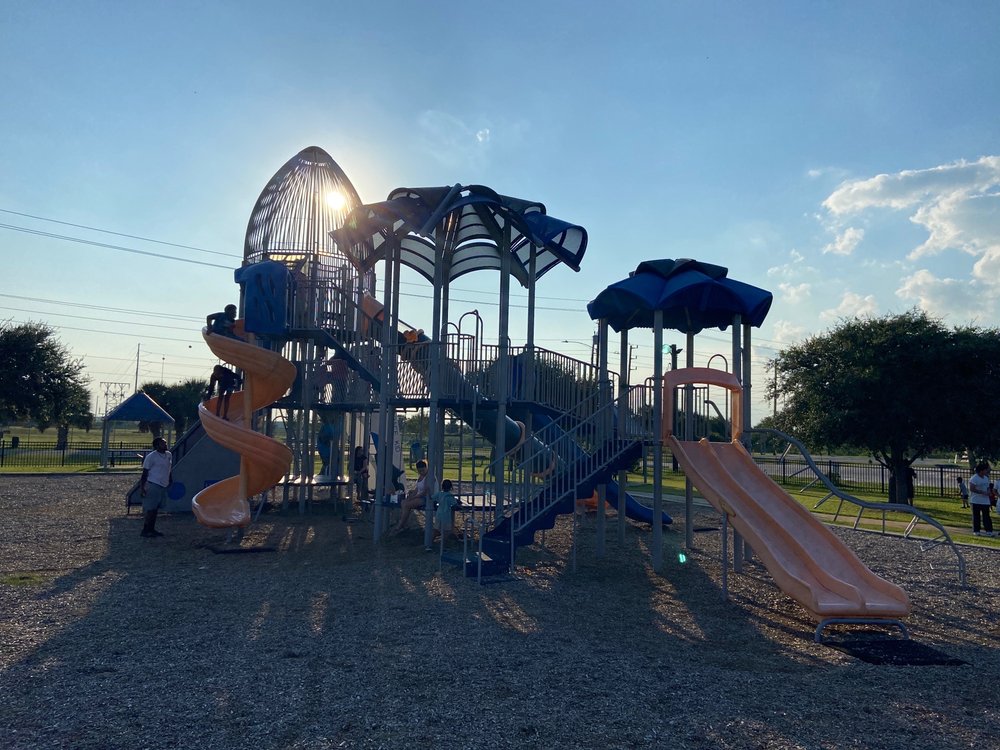
The Seawall itself functions as a 10-mile linear park, consistently cited as the world's longest continuous sidewalk. For runners, cyclists, and anyone who wants a Gulf breeze with minimal elevation change, it's an infrastructure asset that most coastal markets would envy. Mid-island, Adora Park and Menard Park serve local families with playgrounds, dog parks, and skate facilities away from the salt spray of the coast.
The dining scene in Galveston has matured significantly. The island still has its shrimp baskets and waterfront dive bars, and they have their place, but the more relevant signal for buyers evaluating lifestyle quality is what has grown around them.
The Strand and Postoffice Street corridor anchors the city's more sophisticated food and beverage culture. High-end steakhouses, curated wine bars, and the kind of cocktail program where a $20 Old Fashioned is unremarkable now sit inside buildings that once held cotton trading operations. The Grand 1894 Opera House remains one of the more culturally credible venues in coastal Texas, drawing national touring acts into an intimate restored setting.
The West End dining experience is dictated entirely by water and time of day. Restaurants along the bay, including Waterman's and the West End Marina corridor, are built for the boat-arrival crowd. The food skews fresh-catch, the dress code is implied by the parking lot, and the sunsets are the main event. It's a legitimate lifestyle asset for buyers who plan to spend serious time on the water.
The East End hides the island's most local dining. Corner cafes, neighborhood bistros, and espresso bars tucked into residential blocks serve the UTMB community, local preservationists, and the kind of residents who prefer a slow Saturday morning over a busy brunch crowd. This is where you find the island's actual culinary soul, away from the tourist corridors.
Spagnola Realty Group is a Galveston-based team led by Caroline Spagnola, a top-producing agent with an Accredited Luxury Home Specialist designation and seven years of direct experience in Galveston and Houston markets. Caroline is an investment property owner herself, which gives her a perspective on this market that goes beyond transactional familiarity. She has guided buyers through the full range of Galveston's complexity: remote closings with video-documented walkthroughs, coastal due diligence checklists, insurance navigation, and negotiations in both buyer and seller conditions.
The team's client record reflects what buyers in competitive coastal markets actually need: someone who responds quickly, knows the buildings and the neighborhoods at a granular level, and can coordinate the engineers, inspectors, and financing contacts that island transactions routinely require.
If you are buying from The Woodlands, Sugar Land, Dallas, Austin, or anywhere else outside the island, or if you are a seller preparing to list in a market that rewards precision, reach out to Spagnola Realty Group. The conversation is the starting point.
Contact Spagnola Realty Group at spagnolarealtygroup.com or connect directly with Caroline and the team to discuss what you're looking for on the island.
53,348 people live in Galveston, where the median age is 40 and the average individual income is $39,883. Data provided by the U.S. Census Bureau.
Total Population
Median Age
Population Density Population Density This is the number of people per square mile in a neighborhood.
Average individual Income
There's plenty to do around Galveston, including shopping, dining, nightlife, parks, and more. Data provided by Walk Score and Yelp.
Explore popular things to do in the area, including Castaways Poolside Experience, Jimmy's on the Pier, and Hunt Brother Pizza.
| Name | Category | Distance | Reviews |
Ratings by
Yelp
|
|---|---|---|---|---|
| Dining | 0.3 miles | 7 reviews | 4.4/5 stars | |
| Dining · $$ | 0.41 miles | 1172 reviews | 3.5/5 stars | |
| Dining | 0.49 miles | 0 reviews | 0/5 stars | |
| Dining | 0.49 miles | 3 reviews | 3.7/5 stars | |
| Dining · $ | 0.7 miles | 0 reviews | 0/5 stars | |
| Dining · $ | 0.7 miles | 168 reviews | 4.5/5 stars | |
| Dining · $$ | 0.84 miles | 230 reviews | 4.6/5 stars | |
| Dining | 0.94 miles | 1 review | 1/5 stars | |
| Shopping | 0.49 miles | 0 reviews | 0/5 stars | |
| Shopping | 0.49 miles | 25 reviews | 4.5/5 stars | |
| Active | 0.42 miles | 148 reviews | 4.2/5 stars | |
| Active | 0.42 miles | 35 reviews | 3.1/5 stars | |
| Active | 0.42 miles | 29 reviews | 4/5 stars | |
| Active | 0.49 miles | 5 reviews | 1.8/5 stars | |
| Active | 1 miles | 2 reviews | 5/5 stars | |
| Active | 1.09 miles | 0 reviews | 0/5 stars | |
| Active | 1.18 miles | 3 reviews | 4/5 stars | |
| Nightlife | 0.7 miles | 3 reviews | 5/5 stars | |
| Nightlife | 0.91 miles | 0 reviews | 0/5 stars | |
| Nightlife | 0.92 miles | 0 reviews | 0/5 stars | |
| Nightlife | 0.92 miles | 9 reviews | 3.2/5 stars | |
| Beauty | 0.73 miles | 0 reviews | 0/5 stars | |
| Beauty | 0.92 miles | 5 reviews | 5/5 stars | |
| Beauty | 0.92 miles | 0 reviews | 0/5 stars | |
|
|
||||
|
|
||||
|
|
||||
|
|
||||
|
|
||||
|
|
Galveston has 24,518 households, with an average household size of 2.03. Data provided by the U.S. Census Bureau. Here’s what the people living in Galveston do for work — and how long it takes them to get there. Data provided by the U.S. Census Bureau. 53,348 people call Galveston home. The population density is 1,299 and the largest age group is Data provided by the U.S. Census Bureau.
Total Population
Population Density Population Density This is the number of people per square mile in a neighborhood.
Median Age
Men vs Women
Population by Age Group
0-9 Years
10-17 Years
18-24 Years
25-64 Years
65-74 Years
75+ Years
Education Level
Total Households
Average Household Size
Average individual Income
Households with Children
With Children:
Without Children:
Marital Status
Blue vs White Collar Workers
Blue Collar:
White Collar:
Whether buying or selling, we're here to guide you. Connect with Spagnola Realty Group today to discover how we can make your real estate experience seamless and rewarding.